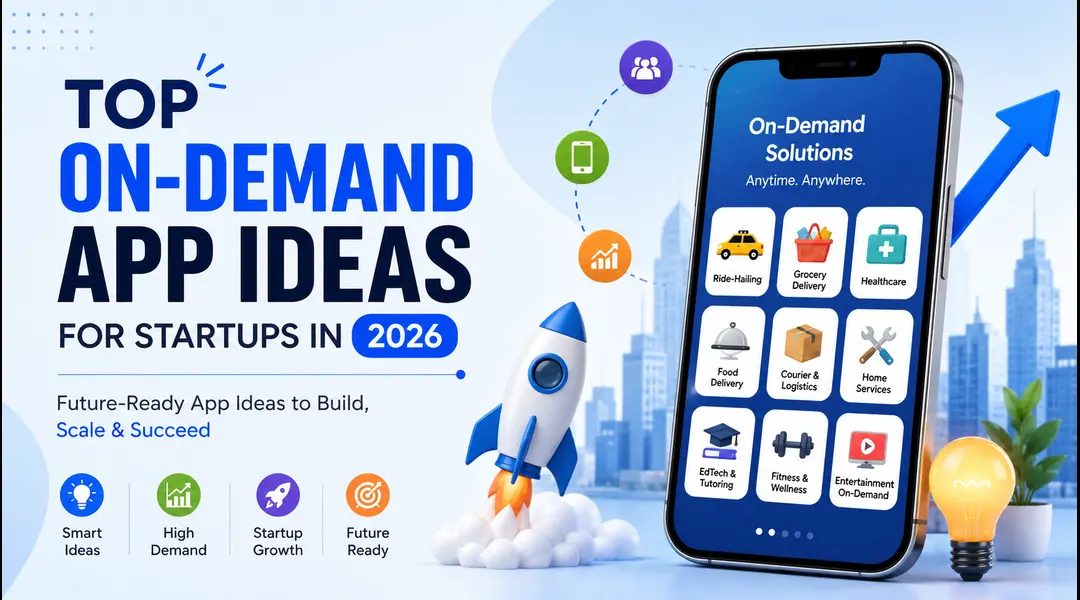
The on-demand economy continues to create new opportunities for startups that can solve everyday problems quickly and conveniently. From booking a service provider to ordering groceries or finding a personal trainer, consumers increasingly expect services to be available whenever they need them.
For entrepreneurs, this shift makes on-demand app development an attractive business opportunity in 2026. However, success depends on choosing the right idea, understanding your target audience, and building an app that delivers genuine value.
If you are planning to launch a startup, here are some of the top on-demand app ideas for startups in 2026, along with key features, business opportunities, and practical tips to turn your concept into a scalable digital product.
What Is an On-Demand App?
An on-demand app connects customers with service providers through a mobile or web platform. Users can browse services, place an order or booking, make payments, track progress, and provide feedback from one convenient application.
Popular examples include food delivery app, transportation, home services, grocery delivery, healthcare, and professional services.
Most successful on-demand platforms bring together three key participants:
- Customers who need a product or service
- Service providers who fulfill those needs
- The platform owner who manages transactions and earns revenue
This marketplace model allows startups to scale without directly providing every service themselves.
Why Startups Should Consider On-Demand Apps in 2026
Convenience remains one of the biggest drivers of digital consumer behavior. People want faster booking, transparent pricing, real-time updates, and simple digital payments.
For startups, on-demand platforms can offer several advantages:
- Access to recurring customer demand
- Multiple monetization opportunities
- Flexible marketplace business models
- Potential to scale into new locations
- Opportunities to use AI and automation
- Strong potential for repeat purchases and bookings
The key is not simply to create another delivery or booking app. Startups should identify a specific problem, underserved audience, or niche market and build an experience around it.
Best On-Demand App Ideas
1. On-Demand Home Services App
Home services are an excellent opportunity for startups because customers regularly need trusted professionals for everyday tasks.
An app can connect homeowners with electricians, plumbers, cleaners, painters, appliance technicians, gardeners, and other professionals.
Useful features include:
- Service category selection
- Provider profiles and reviews
- Instant or scheduled booking
- Location tracking
- In-app payments
- Service history
- Ratings and reviews
- Push notifications
A startup can generate revenue through service commissions, provider subscriptions, booking fees, or premium listings.
2. On-Demand Grocery Delivery App
Grocery delivery remains a practical on-demand business model, particularly when focused on a specific neighborhood, demographic, or product category.
Instead of competing directly with large marketplaces, startups can differentiate through local stores, specialty groceries, organic products, or faster neighborhood delivery.
Important features can include real-time inventory, delivery tracking, digital payments, personalized recommendations, scheduled delivery, and repeat-order functionality.
AI can also help improve product recommendations and demand forecasting as the platform grows.
3. On-Demand Healthcare App
Healthcare is another area where convenience and accessibility can create significant value.
An on-demand healthcare platform could allow users to book doctors, nurses, therapists, diagnostic services, or home healthcare professionals.
Depending on the business model and location, the app may support:
- Appointment scheduling
- Teleconsultation
- Provider profiles
- Prescription management
- Home healthcare booking
- Secure payments
- Notifications and reminders
Healthcare startups must prioritize privacy, security, licensing, and applicable healthcare regulations before launching.
4. On-Demand Beauty and Salon App
Customers increasingly prefer booking beauty and wellness services from their phones.
An on-demand beauty app can connect customers with hairstylists, makeup artists, nail technicians, massage professionals, and other providers.
The platform can offer both at-home services and salon appointments.
Features such as provider portfolios, availability calendars, reviews, location-based discovery, online booking, and digital payments can make the experience more convenient.
Startups can monetize through commissions, subscription plans, featured listings, and booking fees.
5. On-Demand Pet Care App
Pet owners often need reliable services when they are working, traveling, or unavailable during the day.
An on-demand pet care platform could connect users with:
- Dog walkers
- Pet sitters
- Groomers
- Trainers
- Pet taxi services
- Veterinary services
The app can include provider verification, pet profiles, booking management, location tracking, digital payments, and reviews.
A specialized pet-care marketplace can stand out by focusing on trust, safety, and highly personalized services.
6. On-Demand Laundry and Dry-Cleaning App
Laundry is a recurring household task, making it suitable for an on-demand business model.
Customers can schedule pickup and delivery through an app instead of visiting a physical laundry facility.
A strong platform can provide:
- Pickup scheduling
- Service selection
- Order tracking
- Digital payments
- Delivery notifications
- Recurring orders
- Special cleaning instructions
Startups can partner with local laundries and dry cleaners rather than building their own facilities, reducing initial operational complexity.
7. On-Demand Car Wash and Auto Care App
Car owners frequently need cleaning, detailing, maintenance, tire services, and other automotive services.
An on-demand car care app can let customers book professionals at their home, workplace, or another convenient location.
Potential services include mobile car washing, detailing, oil changes, battery assistance, tire services, and basic maintenance.
Location-based booking, provider availability, transparent pricing, service packages, and appointment reminders can improve customer experience.
8. On-Demand Fitness and Personal Training App
Fitness is another promising niche for on-demand services.
Instead of requiring users to visit a gym, an app can connect them with personal trainers, yoga instructors, nutrition coaches, and wellness professionals.
The platform can support home visits, online sessions, group classes, and personalized training plans.
Startups can generate revenue through booking commissions, subscriptions, trainer memberships, or premium fitness programs.
9. On-Demand Tutoring and Education App
Students and parents often need flexible access to qualified tutors.
An on-demand tutoring platform can connect learners with tutors based on subject, availability, experience, location, and pricing.
Useful features include:
- Tutor profiles
- Subject-based search
- Instant or scheduled sessions
- Video calling
- Digital whiteboards
- Online payments
- Ratings and reviews
Startups can target specific niches such as test preparation, language learning, coding, music, or professional skills.
10. On-Demand Delivery and Courier App
Businesses and consumers regularly need documents, packages, and other items transported quickly.
A local courier marketplace can connect customers with independent delivery partners and provide real-time order tracking.
The app could support same-day delivery, scheduled delivery, business accounts, route optimization, digital payments, and proof of delivery.
For startups, focusing on a specific geographic area or business segment can be more practical than trying to compete with national delivery networks from day one.
Essential Features for an On-Demand App
Regardless of the industry, your app should provide a simple and reliable customer experience.
Important features include:
User Registration and Profiles
Allow customers and service providers to create secure profiles and manage their information.
Search and Location-Based Discovery
Users should quickly find relevant services based on location, category, availability, and preferences.
Booking and Order Management
Customers need an easy way to schedule, modify, cancel, and track orders or appointments.
Secure Online Payments
Support reliable payment options while protecting sensitive transaction information.
Real-Time Tracking
For delivery and mobile services, tracking can increase transparency and reduce uncertainty.
Ratings and Reviews
Reviews help users make informed decisions and encourage service providers to maintain quality.
Push Notifications
Notifications can provide booking confirmations, status updates, reminders, and promotions.
Admin Dashboard
The business owner needs tools to manage users, providers, payments, orders, disputes, analytics, and platform performance.
How to Choose the Right On-Demand App Idea
Having a good idea is only the beginning. Before investing in development, validate the business opportunity.
Start by asking:
- What problem does the app solve?
- Who is the target customer?
- How frequently will customers use the service?
- Are customers already paying for alternatives?
- How will you attract service providers?
- What will make your platform different?
- Can the model scale to additional locations?
Research competitors, interview potential customers, study pricing, and validate demand before building the complete product.
How Much Does On-Demand App Development Cost?
The cost of developing an on-demand app depends on its complexity, platform, design, features, integrations, development team, and location.
A basic MVP with essential features will generally cost less than a sophisticated marketplace with real-time tracking, AI, advanced analytics, multiple user roles, and third-party integrations.
Instead of building every feature immediately, startups should consider launching an MVP (Minimum Viable Product) with the core functionality needed to test market demand.
Once the concept gains traction, additional features can be introduced based on customer feedback and business requirements.
How to Monetize an On-Demand App
Startups can use several revenue models depending on their target market.
Common options include:
- Commission: Take a percentage from every completed transaction.
- Booking fee: Charge customers a small fee per booking.
- Subscription: Offer premium plans for customers or providers.
- Provider membership: Charge professionals for access to marketplace tools.
- Featured listings: Allow providers to pay for greater visibility.
- Advertising: Generate additional revenue through relevant promotions.
A hybrid monetization strategy can provide multiple revenue streams as the marketplace grows.
Final Thoughts
The best on-demand app ideas for startups in 2026 are not necessarily the most complicated ones. The strongest opportunities often come from solving a specific problem better, faster, or more conveniently than existing alternatives.
Whether you choose home services, healthcare, pet care, beauty, grocery delivery, education, fitness, or another niche, start with customer research and a focused MVP.
A successful on-demand app development strategy should combine a validated business model, intuitive UX, reliable technology, secure payments, scalable architecture, and continuous improvement based on real user feedback.
If you have a promising idea, validating the market before investing heavily in development can help reduce risk and create a stronger foundation for long-term growth.
FAQsL
1. What is the best on-demand app idea for startups in 2026?
Home services, healthcare, pet care, beauty, grocery delivery, fitness, education, and specialized delivery platforms are promising areas. The best choice depends on local demand and competition.
2. How much does it cost to build an on-demand app?
The cost varies based on features, complexity, platforms, integrations, design, and development resources. Starting with an MVP can help control the initial investment.
3. What features should an on-demand app have?
Core features typically include user profiles, search, booking, payments, notifications, ratings, order management, location services, and an admin dashboard.
4. How do on-demand apps make money?
Common monetization methods include commissions, booking fees, subscriptions, provider memberships, featured listings, and advertising.
5. How can I start an on-demand app business?
Begin by identifying a specific customer problem, researching competitors, validating demand, defining your business model, building an MVP, and testing it with real users before scaling.