In today’s fast-moving business environment, managing employees efficiently is no longer optional, it’s essential. As companies continue to embrace digital transformation, Human Resource Management System (HRMS) software has become one of the most valuable investments for organizations of all sizes.
From automating payroll and attendance tracking to improving employee engagement and compliance, an HRMS software solution simplifies complex HR processes and empowers businesses to focus on growth.
In this blog, we’ll explore why every business needs an HRMS software solution in 2026 and how it can transform your workforce management strategy.
What is an HRMS Software Solution?
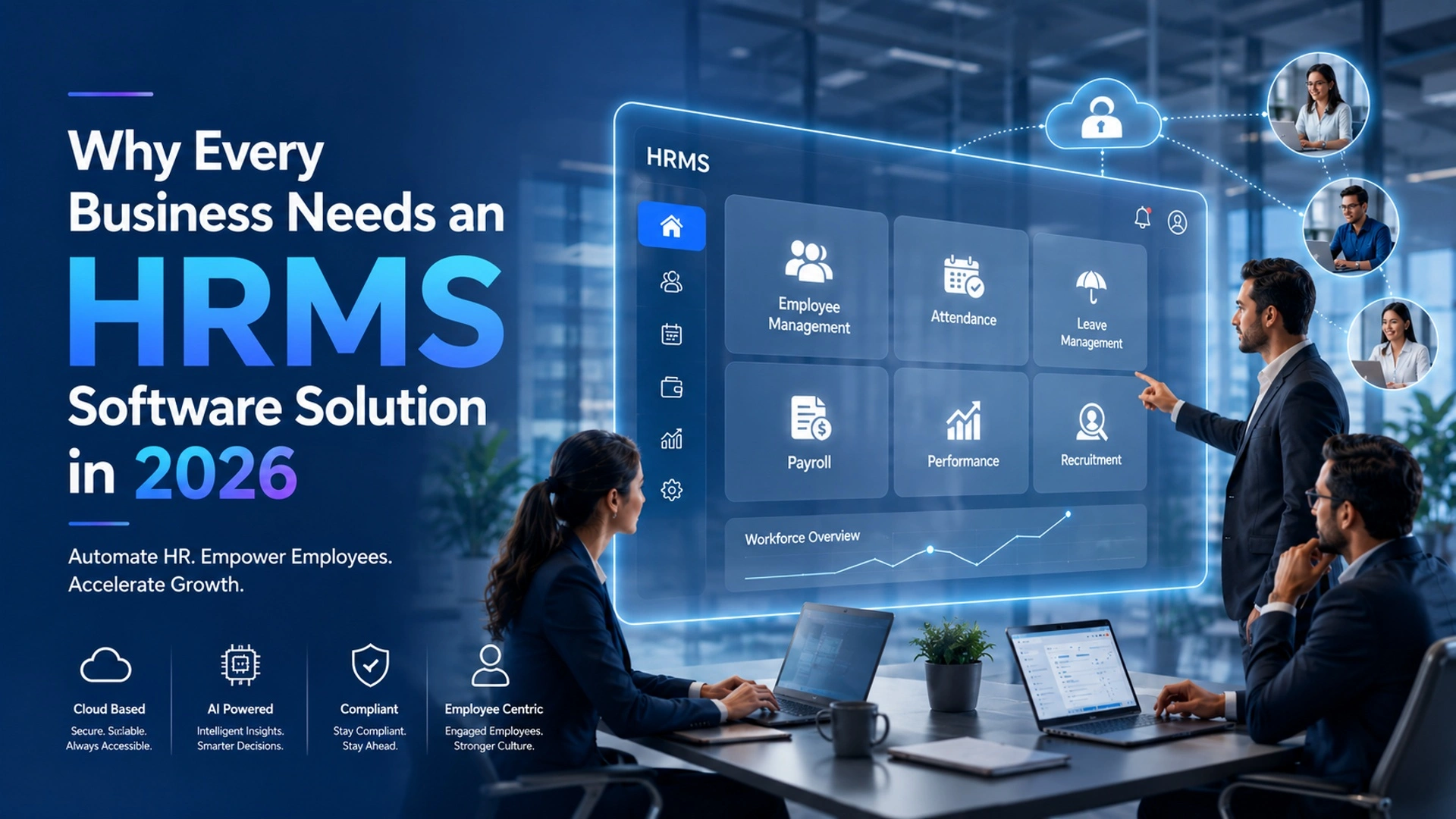
An HRMS (Human Resource Management System) is an all-in-one platform that helps organizations manage their workforce digitally. It combines various HR functions such as:
- Employee data management
- Attendance and leave tracking
- Payroll processing
- Recruitment and onboarding
- Performance management
- Employee self-service
- Compliance management
- Analytics and reporting
Modern cloud HRMS software enables HR teams and employees to access information anytime and anywhere, improving efficiency and collaboration.
Why Businesses Are Adopting HRMS Software Faster Than Ever
The workplace has changed dramatically in recent years. Hybrid work models, growing compliance requirements, and increasing employee expectations have made traditional HR methods outdated.
Businesses are now looking for smarter ways to:
- Reduce manual HR work
- Improve employee experience
- Make data-driven decisions
- Ensure legal compliance
- Increase productivity
- Scale operations efficiently
This is where HRMS software solutions become a game changer.
1. Automates Time-Consuming HR Processes
Manual HR operations consume significant time and are prone to errors. Tasks like payroll calculations, attendance tracking, and leave approvals can become overwhelming as organizations grow.
HR automation software streamlines these repetitive activities by automating workflows.
With an HRMS, businesses can:
- Automatically calculate salaries and deductions
- Track attendance in real time
- Approve leave requests digitally
- Generate payslips instantly
- Maintain employee records securely
Automation allows HR teams to focus on strategic initiatives rather than administrative tasks.
2. Simplifies Payroll Management
Payroll is one of the most critical functions in any organization. Errors in salary processing can affect employee trust and create compliance issues.
A payroll management software integrated within an HRMS ensures:
- Accurate salary calculations
- Automatic tax and deduction management
- Timely salary disbursement
- Generation of payroll reports
- Compliance with statutory regulations
Businesses can eliminate spreadsheet errors and save countless hours every month.
3. Enhances Employee Experience
Employees today expect digital experiences similar to consumer applications.
Modern HRMS software offers employee self-service portals where employees can:
- Apply for leave
- View payslips
- Update personal information
- Check attendance records
- Access company policies
- Submit expense claims
Providing employees with easy access to HR services increases satisfaction and reduces dependency on HR teams.
4. Improves Attendance and Leave Management
Tracking attendance manually can be tedious, especially for organizations with multiple teams or remote employees.
An attendance management system integrated with HRMS enables:
- Real-time attendance tracking
- Biometric integration
- Geo-location attendance
- Shift management
- Overtime calculations
- Automated leave balances
Similarly, a leave management system allows employees to request leave online while managers can approve requests instantly.
This transparency improves accountability and reduces administrative overhead.
5. Better Recruitment and Onboarding
Hiring the right talent is critical for business success.
HRMS software simplifies recruitment by helping organizations:
- Post job openings
- Track applicants
- Schedule interviews
- Manage candidate pipelines
- Store resumes centrally
Once candidates are hired, onboarding workflows ensure a seamless transition.
Digital onboarding includes:
- Document collection
- Policy acknowledgements
- Training assignments
- Employee profile creation
This reduces paperwork and creates a positive first impression.
6. Data-Driven HR Decisions
Modern HRMS platforms provide advanced analytics and reporting capabilities.
Businesses can gain insights into:
- Employee turnover rates
- Attendance trends
- Hiring performance
- Payroll expenses
- Leave patterns
- Workforce productivity
These insights help leaders make informed decisions and develop effective workforce strategies.
Instead of relying on assumptions, companies can use real-time data to improve performance.
7. Ensures Compliance and Reduces Risks
HR compliance requirements are constantly evolving.
Managing labor laws, tax regulations, and employee records manually can expose businesses to legal risks.
An HRMS software solution helps organizations:
- Maintain accurate employee records
- Generate compliance reports
- Store documents securely
- Track statutory requirements
- Maintain audit trails
This minimizes errors and helps businesses stay compliant with local regulations.
8. Supports Remote and Hybrid Workforces
The rise of remote and hybrid work has changed how businesses operate.
Cloud HRMS software enables employees and managers to access HR services from anywhere.
Features like:
- Mobile attendance
- Online leave applications
- Digital approvals
- Employee self-service
- Cloud document storage
ensure smooth HR operations regardless of location.
This flexibility is essential for businesses in 2026 and beyond.
9. Scales with Business Growth
As businesses expand, HR processes become increasingly complex.
Managing hundreds or thousands of employees manually is nearly impossible.
A scalable HRMS software solution grows alongside the organization.
Whether a company:
- Opens new branches
- Expands globally
- Hires more employees
- Introduces new departments
the HRMS adapts without requiring major operational changes.
This makes it a long-term investment rather than a short-term tool.
10. Cost Savings and Higher ROI
Many businesses initially hesitate to invest in HR software due to cost concerns.
However, the return on investment is substantial.
HRMS software reduces:
- Administrative costs
- Payroll errors
- Paperwork expenses
- Compliance penalties
- Employee turnover costs
By automating workflows and improving efficiency, businesses save both time and money.
Over time, these savings far outweigh the software investment.
Key Features to Look for in an HRMS Software Solution
When choosing the best HRMS software for your business, consider features such as:
Employee Management
Centralized employee database with secure information storage.
Attendance Management
Real-time attendance tracking with biometric or mobile integration.
Payroll Processing
Automated payroll calculations and statutory compliance.
Leave Management
Configurable leave policies with approval workflows.
Recruitment Management
Applicant tracking and onboarding capabilities.
Performance Management
Goal setting, reviews, and employee feedback systems.
Employee Self-Service
Allow employees to access HR information independently.
Analytics and Reports
Comprehensive dashboards for data-driven decision making.
The Future of HRMS Software in 2026
The future of HRMS is being shaped by technologies such as:
- Artificial Intelligence (AI)
- Predictive analytics
- Chatbots for HR support
- AI-powered recruitment
- Workforce analytics
- Automated employee engagement tools
Businesses adopting modern HRMS software today will be better positioned to compete in an increasingly digital world.
Organizations that continue relying on spreadsheets and manual processes risk falling behind.
Final Thoughts
In 2026, HR is no longer just about managing employees, it’s about creating exceptional employee experiences, improving efficiency, and driving business growth.
An HRMS software solution empowers organizations to automate operations, enhance productivity, ensure compliance, and make smarter workforce decisions.
Whether you’re a startup, SME, or large enterprise, investing in the right HRMS software can transform the way your organization manages people.
As businesses continue to evolve, adopting a modern, cloud-based HRMS is not just a technology upgrade, it’s a strategic advantage that prepares organizations for the future of work.
FAQs:
1. What is HRMS software and why is it important for businesses?
HRMS software is a Human Resource Management System that automates HR processes such as payroll, attendance, leave management, recruitment, and employee records. It helps businesses improve efficiency, reduce manual work, and enhance employee experience.
2. How does HRMS software improve payroll management?
HRMS software automates salary calculations, tax deductions, payslip generation, and statutory compliance. This reduces payroll errors and ensures employees are paid accurately and on time.
3. Is HRMS software suitable for small businesses?
Yes, HRMS software is ideal for small businesses as it automates repetitive HR tasks, reduces administrative costs, and helps companies scale efficiently without increasing HR workload.
4. What are the key features of the best HRMS software in 2026?
The best HRMS software typically includes employee management, payroll processing, attendance management, leave management, recruitment tools, employee self-service, performance tracking, and analytics dashboards.
5. How does cloud HRMS software support remote and hybrid teams?
Cloud HRMS software enables employees and managers to access HR services from anywhere. Features like mobile attendance, online leave applications, digital approvals, and self-service portals make remote workforce management seamless.